My bedroom looked cluttered and flat for years. I kept buying small accents to "fix" it. Then I realized the room needed fewer, larger decisions: a bigger rug, long curtains, better bedding, and softer light. I spent about $320 on key textiles and lighting and it now reads calm and intentional. People ask how I did it.
This is a minimalist bedroom guide with warm-minimalism details. Budget: $250–450 to refresh from an existing room; $500+ if you’re replacing major pieces. Works for small to medium bedrooms. The current trend is textured neutrals and warm wood tones rather than stark white boxes.
What You'll Need for This Look
Foundation pieces:
- 8×10 jute area rug in natural (~$120-180)
- Linen curtains, white, 96-inch panels (set of 2) (~$35-50 per panel)
Textiles & layers:
- Linen duvet cover in sage green, queen (~$70-110)
- Chunky cable knit throw in oatmeal (~$40-60)
- Euro pillow inserts, 26×26, set of 2 (~$35-50)
Lighting:
- Rattan pendant light, 15-inch diameter (~$60-90)
- Table lamp with linen shade, 20-inch (~$45-70)
Finishing touches:
- Artificial olive tree in cement pot, 4-5 ft (~$70-110)
- Woven storage baskets, set of 3 (~$35-55)
- Graduated candlesticks set, brass finish (~$25-40)
Budget-friendly swap:
- Linen-blend curtains, white, 96-inch (about half the price of real linen)
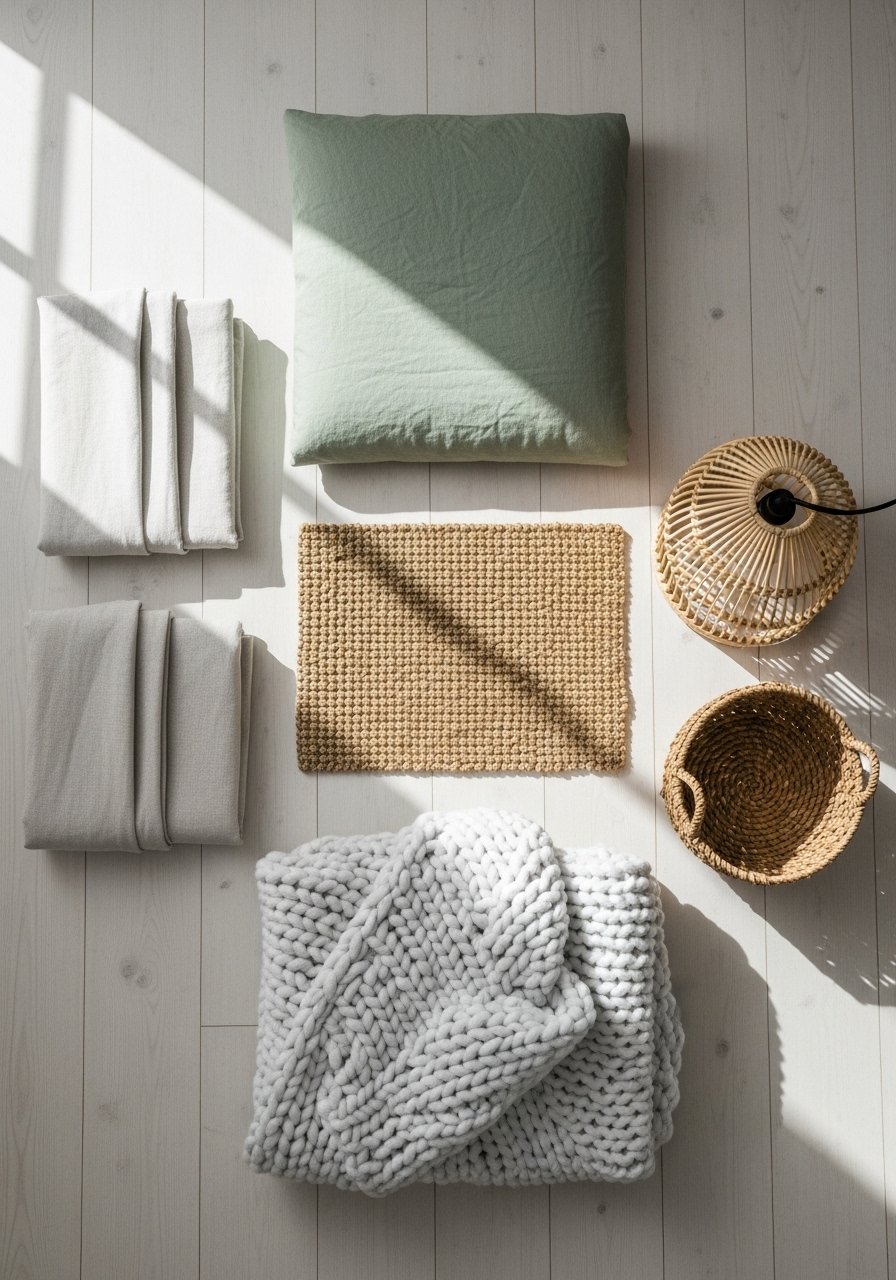
Start with the foundation: rug and curtains
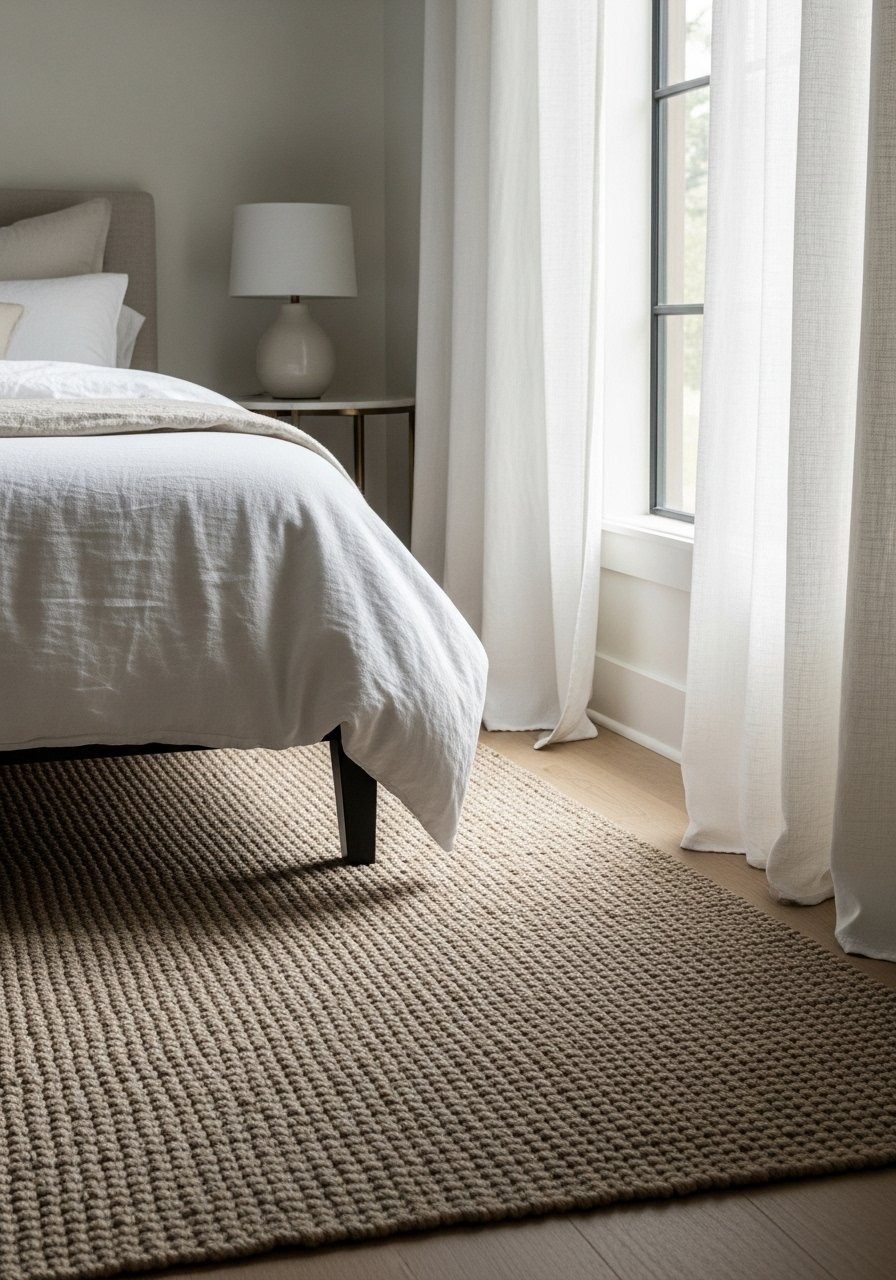
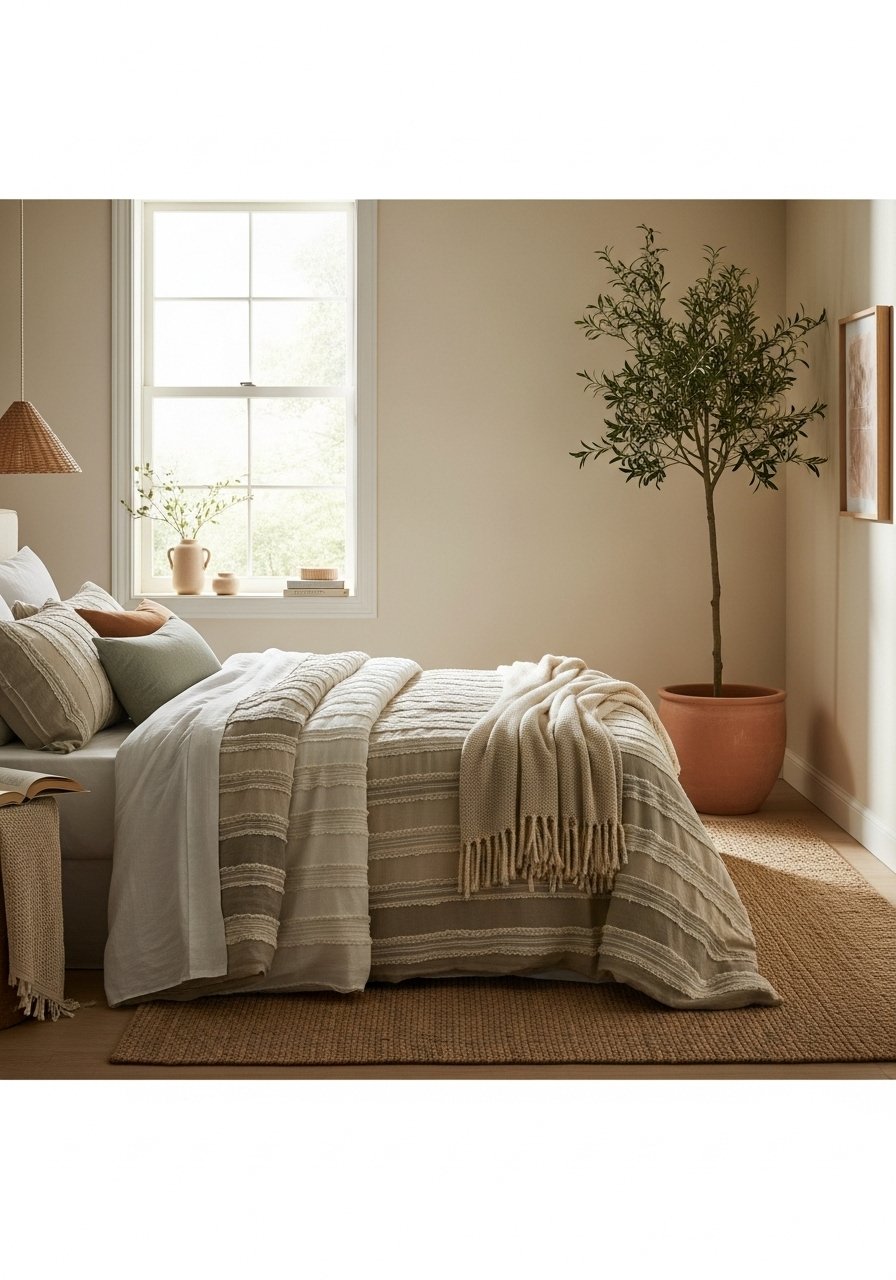
The rug and curtains set the scale and mood. I replaced a too-small 5×8 rug with an 8×10 jute rug for ~$150. The rule I follow: at minimum the front legs of the bed and nightstands must sit on the rug. That anchors the layout and makes the room feel larger.
For curtains I use white linen panels, 96-inch. Hang the rod 2–4 inches below the ceiling or as high as crown molding allows. Panels should just kiss or puddle slightly on the floor. Higher curtains visually add height. My first mistake was hanging them at the window frame; it chopped the wall and made ceilings feel low. Switching to full-length panels made the room breathe.
Layer in softness with oversized textiles for calm comfort
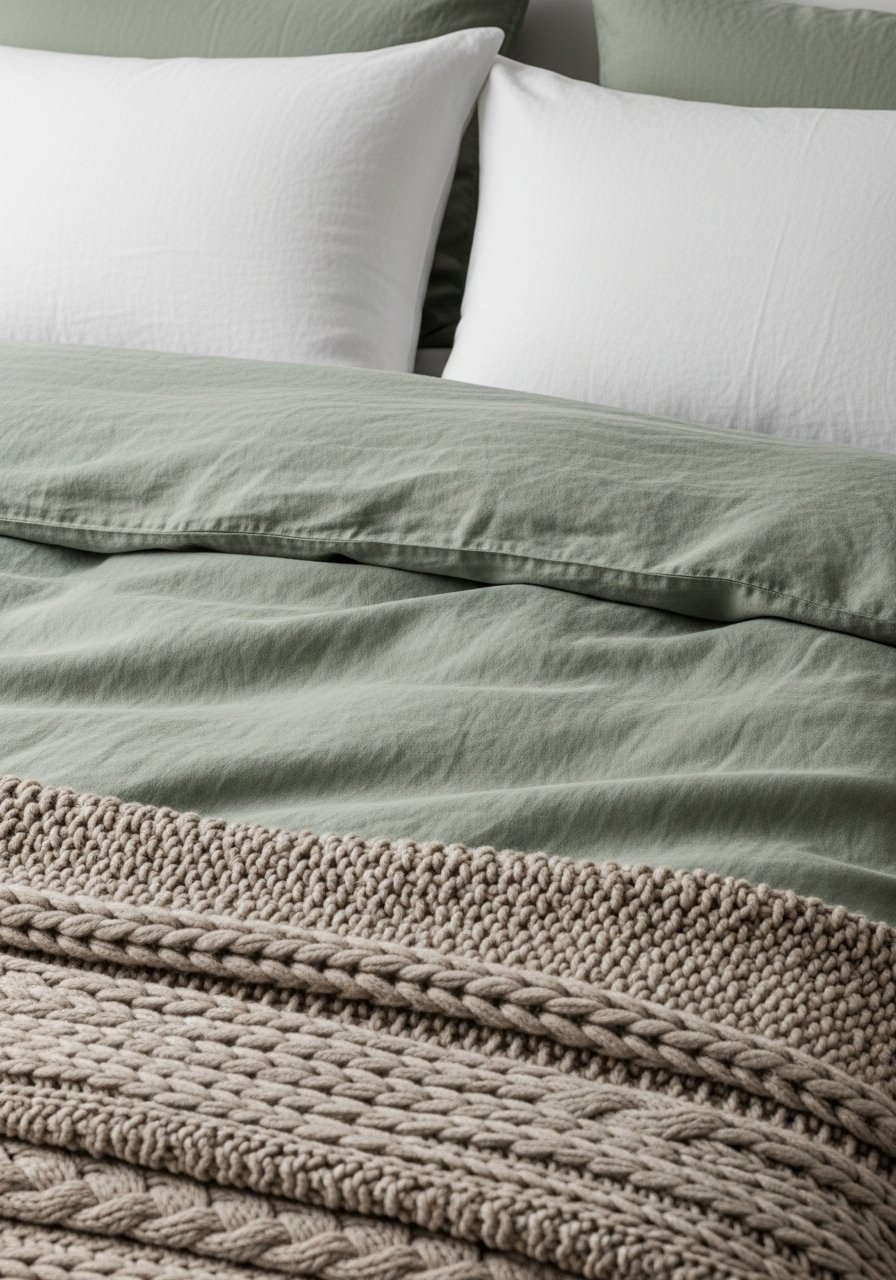
Bedding is the next layer. I used a linen duvet cover in sage green, queen for a subtle color anchor. Linen reads relaxed and hides wrinkles. Add two 26×26 euro inserts behind standard pillows for scale. Finish with a chunky cable knit throw in oatmeal draped casually over the foot of the bed.
Proportions matter: euros should be roughly one-third the bed width. Standard pillows go in front, then a neat duvet fold. I once used bright patterned shams and it pulled focus. I removed them for all-solid neutrals and the room reads calmer. The texture contrast—linen, chunky knit, woven jute—adds depth without visual clutter.
Create ambiance with warm, diffused lighting for a calming glow
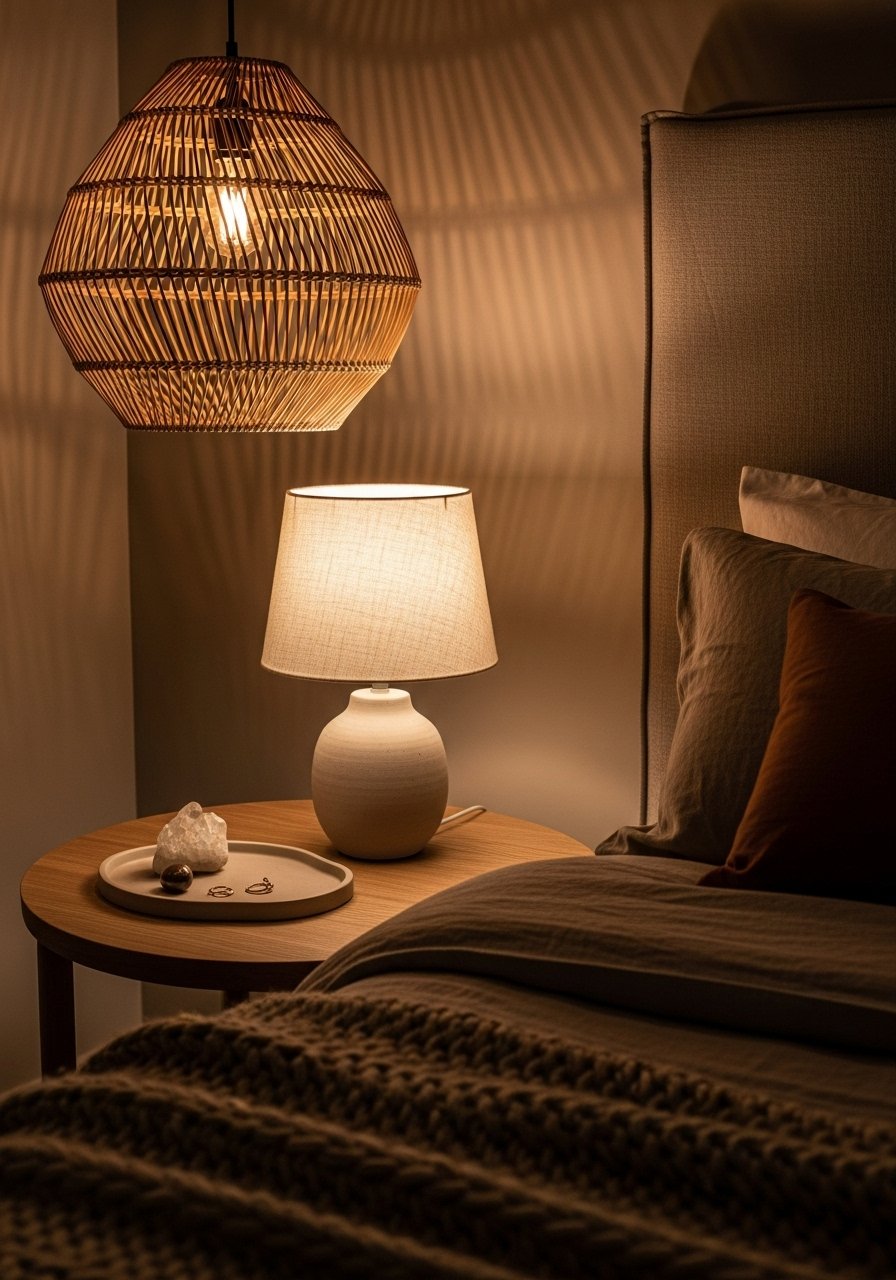
Light changes everything. I hung a rattan pendant, 15-inch centered over one side of the bed and used a table lamp with linen shade on the other nightstand for layered light. For pendants, aim for 26–30 inches above the nightstand surface. Use warm white bulbs (around 2700K) and a dimmer or a smart dimmable bulb to soften the scene.
Layered sources prevent a single harsh overhead. The rattan shade casts a soft pattern that makes the room feel lived-in. I tried a bright pendant with no side lamp and the bed felt like a stage. Balancing ambient and task light solved it.
Common Styling Mistakes to Avoid
Mistake: Using decor all at the same height
Why it doesn't work: The eye has nowhere to rest; the layout feels flat.
Do this instead: Vary heights in odd numbers. Graduated candlesticks set creates interest automatically.
Mistake: Hanging curtains at the window frame
Why it doesn't work: It chops the wall and shortens ceilings.
Do this instead: Mount the rod higher. Adjustable curtain rods fit any window width.
Mistake: Buying a rug that’s too small
Why it doesn't work: Furniture floats and the room reads choppy.
Do this instead: Choose a rug where the front legs of the bed and nightstands sit on it. Start with 8×10 area rug options.
Shopping Guide: Where to Find These Items
- For budget linens: try Amazon’s linen-blend collections. Linen-blend duvet covers are under $50 and photograph like real linen.
- Splurge on the rug: a good rug lasts years. Hand-woven jute rugs are warm and durable.
- If your room lacks light, pick realistic faux greenery. Artificial fiddle leaf or olive trees look better than a struggling real plant.
- Choose lighter wood tones like white oak for furniture and shelves. White oak floating shelves read fresh and current.
Start with the rug and curtains. Those two moves alone will change how the room feels. I added the chunky cable knit throw later, and it made the space feel more relaxed overnight. Which one will you start with?

