My bedroom looked like a bland rental for years. I fixed it by focusing on three things: scale, texture, and warm lighting. I spent about $180 on textiles and lamps the first month. Now friends ask if I hired a designer.
This is a modern minimalist-meets-modern-farmhouse bedroom. Budget: $200–$500 to refresh, or $500+ to buy everything new. Works best for a master or guest bedroom. Right now, light neutral rooms with layered texture are trending—think calm, not stark.
What You'll Need for This Look
Foundation pieces:
- 8×10 jute area rug in natural (~$120-180)
- Linen curtains, white, 96-inch (~$35-50 per panel, need 2-4)
Textiles & layers:
- Chunky cable knit throw in oatmeal (~$40-60)
- Linen duvet cover in sage green, queen (~$70-110)
- Euro pillow inserts, 26×26, set of 2 (~$35-50)
Lighting:
- Rattan pendant light, 15-inch diameter (~$60-90)
- Table lamp with linen shade (~$45-70)
Finishing touches:
- Artificial olive tree in cement pot, 4 ft (~$70-110)
- Woven storage baskets, set of 3 (~$35-55)
Budget-friendly swap:
- Linen-blend curtains for half the cost of real linen
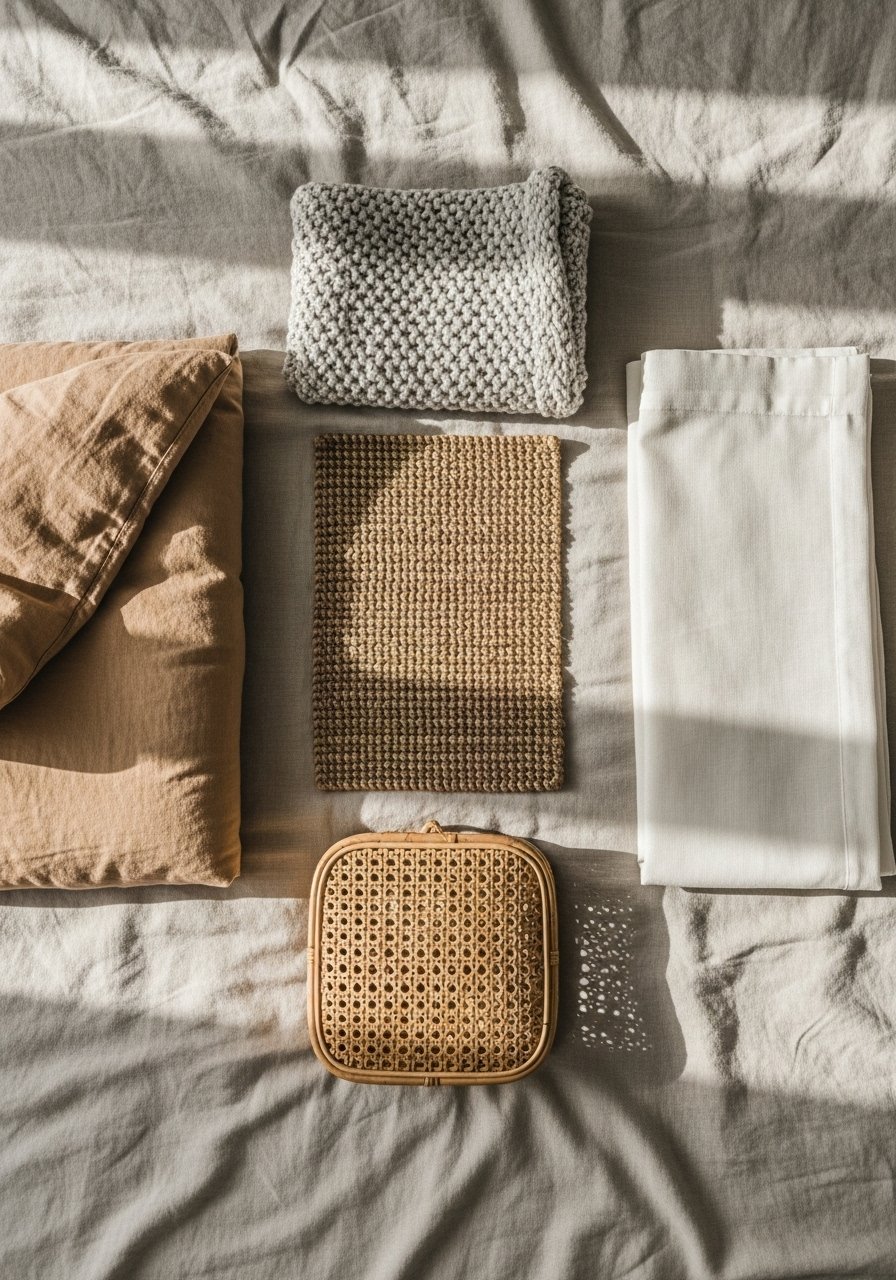
Start with the foundation: rug and curtains
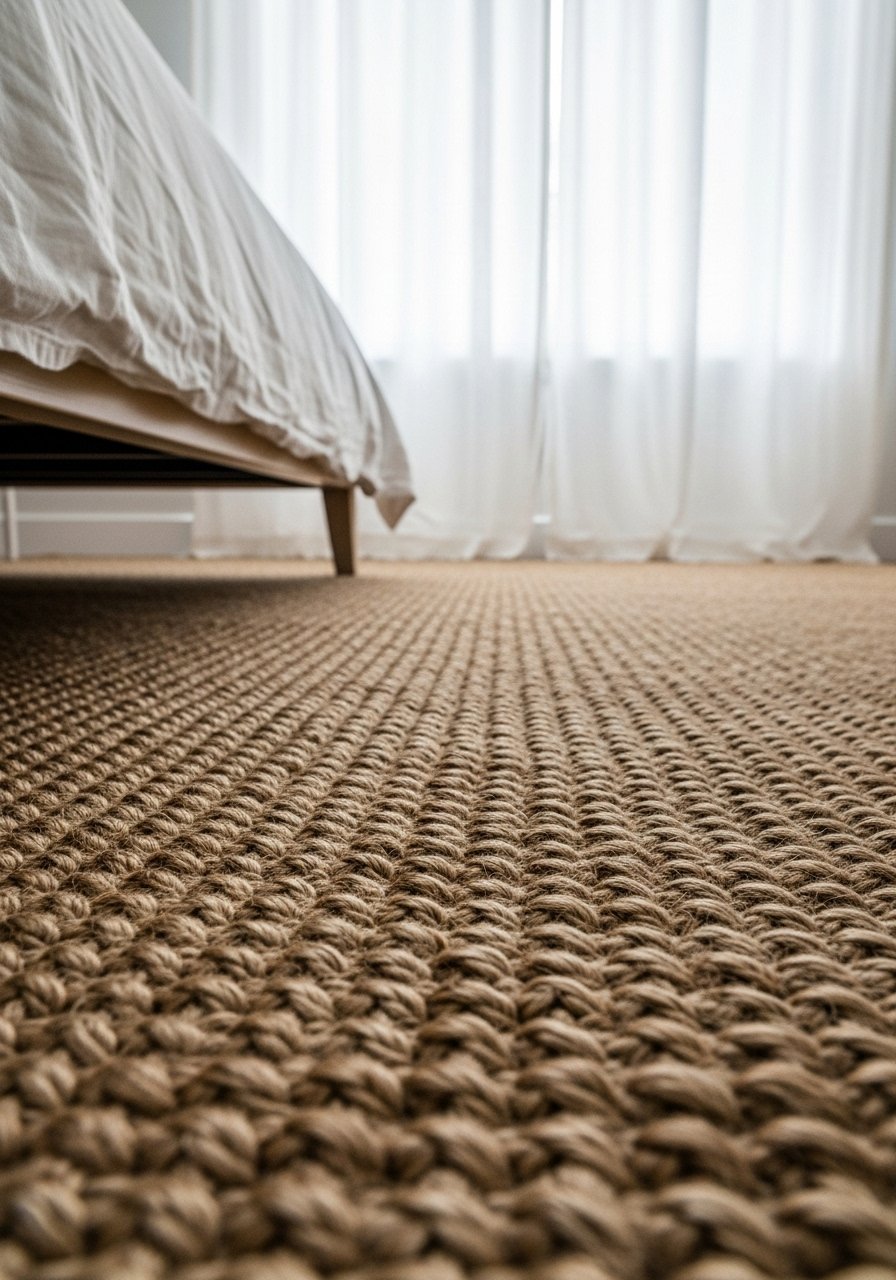
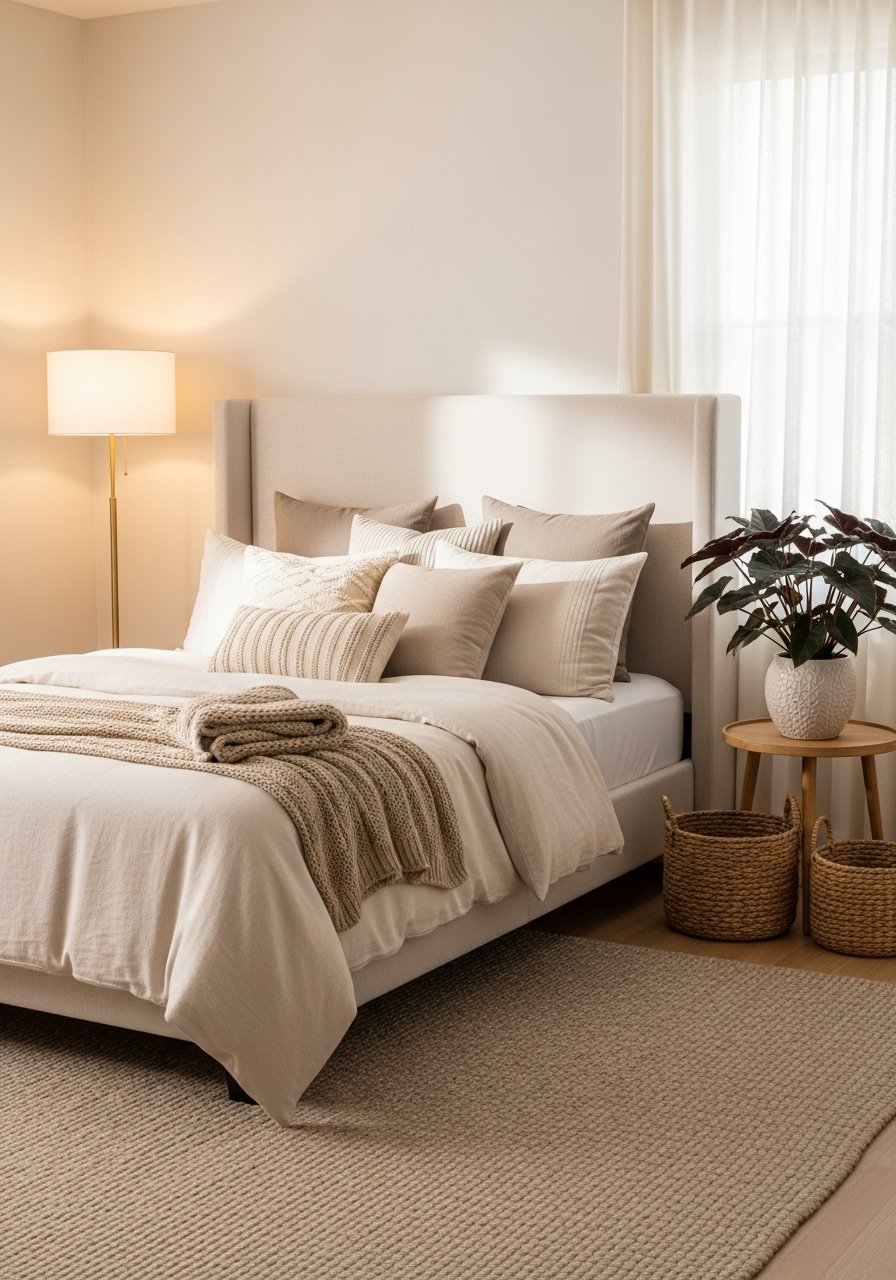
The rug and curtains set the tone. I used an 8×10 jute rug so the bed’s front legs sit on it. That single rule makes the room feel intentional. The rug’s natural fiber adds warmth to cream walls without adding color.
I hung white linen curtains about 3 inches from the ceiling. That makes 8-foot ceilings read taller. Let panels kiss the floor or puddle slightly. Too-short panels break the vertical line and make the room feel chopped.
Visual principle: scale and vertical emphasis. Mistake people make: choosing a too-small rug. If furniture floats off the rug, the layout feels disjointed. If you need a cheaper option, use linen-blend curtains to get the same look at lower cost.
Layer in softness with oversized textiles
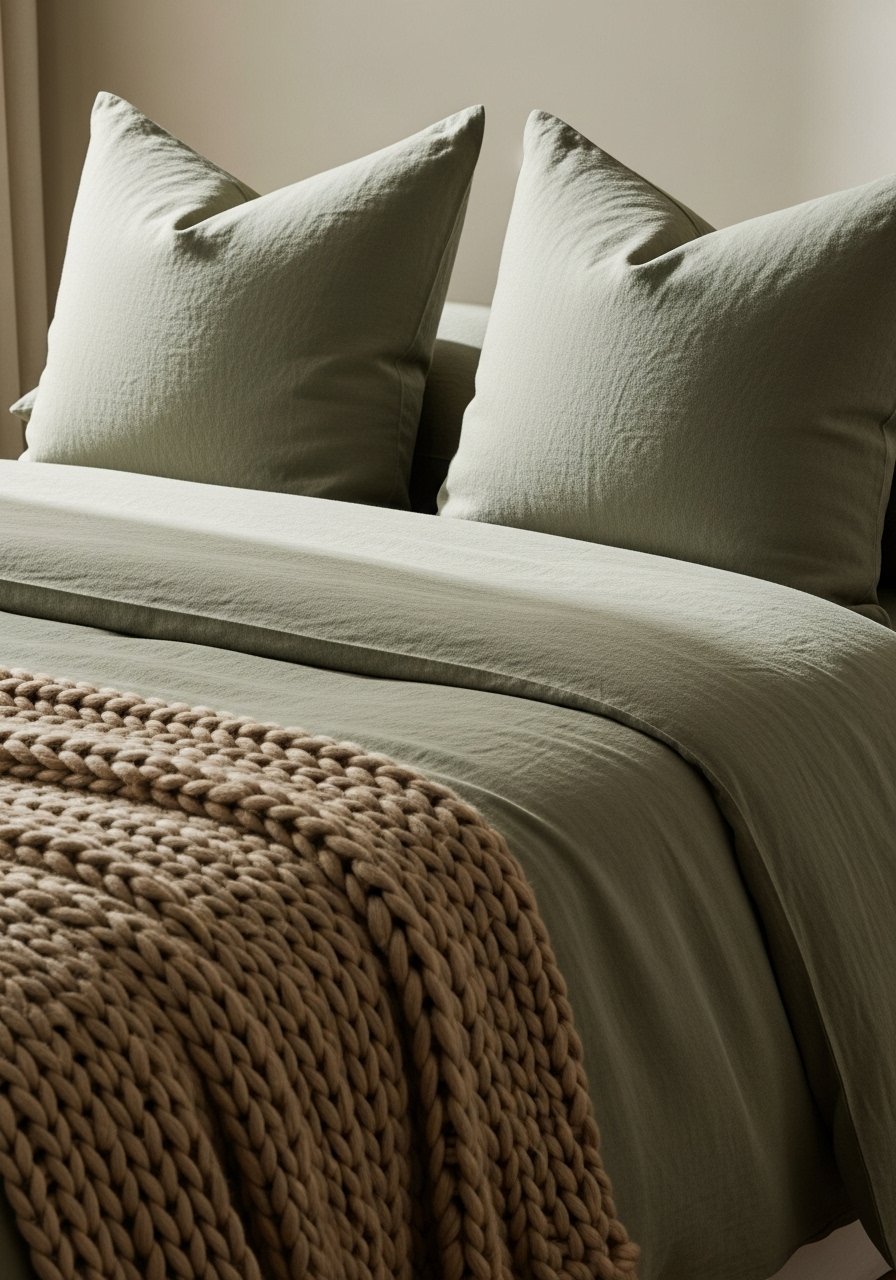
Bedding is where texture creates the "retreat" feeling. I originally tried all-white bedding. It looked flat. I swapped in a sage linen duvet cover, queen. The soft green tones warm the cream and beige palette without stealing attention.
Layer euro pillows (26×26) behind sleeping pillows for structure. I use Euro pillow inserts, 26×26, set of 2. The rule I follow: back layers about 1/3 the bed’s width in height and centered. Add a chunky knit throw folded at the foot for contrast. I use a chunky cable knit throw in oatmeal. It reads expensive because of scale and fiber weight.
Mistake: too many small pillows. Keep shapes large and simple. Odd numbers work best—three items feel balanced.
Create ambiance with warm, diffused lighting
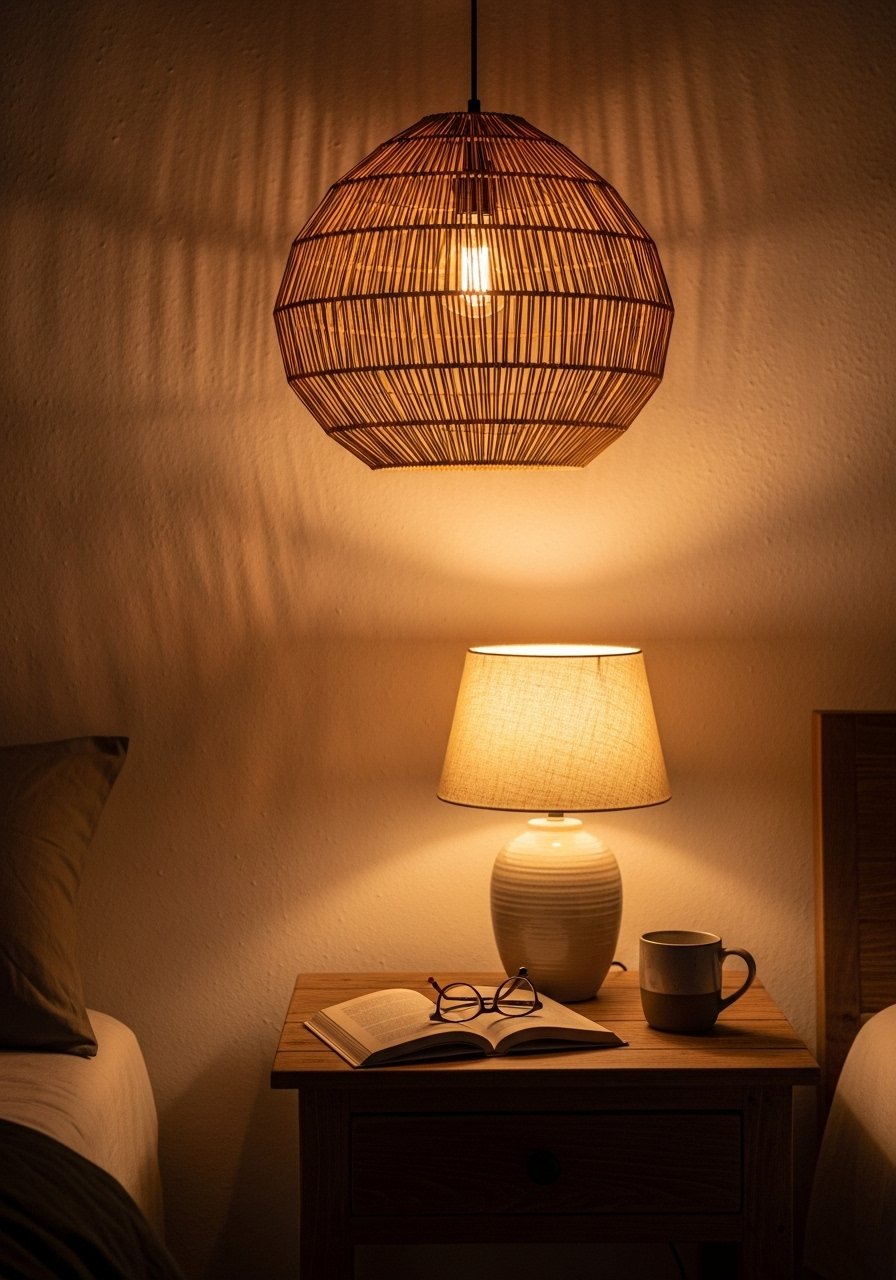
Lighting seals the mood. I swapped a harsh overhead for a rattan pendant, 15-inch and layered bedside table lamps with linen shades. The pendant adds texture and a soft shadow pattern. Lamps give task light for reading and create pools of warmth.
Use warm bulbs (around 2700K). Place pendants about 28–32 inches above a nightstand or 12–14 inches from the headboard edge if hanging low. Lamps should be eye-level when seated. I also added an artificial olive tree in a corner to add height and break flat sightlines.
Mistake: only using a single ceiling light. That leaves everything flat. Mix ambient, task, and accent lights for depth.
Common Styling Mistakes to Avoid
Mistake: Using all decor at the same height
Why it doesn't work: The eye has nowhere to rest. The room feels static.
Do this instead: Vary heights in odd numbers. Graduated candlesticks set or a tall plant break the line.
Mistake: Hanging curtains at the window frame
Why it doesn't work: It visually lowers the ceiling.
Do this instead: Mount rods close to the ceiling. Adjustable curtain rods help fit any width.
Mistake: Buying furniture, then forcing a small rug under it
Why it doesn't work: The layout looks disconnected.
Do this instead: Choose a rug that fits the seating or bed arrangement. Start with an 8×10 minimum for most standard bedrooms.
Shopping Guide: Where to Find These Items
- Budget textiles on Amazon: Linen-blend duvet covers give the linen look under $50. Good for renters.
- Splurge on the rug: A hand-woven jute rug holds up. Hand-woven jute rug 8×10 is worth the investment.
- Faux plants that read real: If light is poor, a realistic artificial fiddle leaf fig looks better than a struggling live plant.
- Stick with light wood tones: White oak finishes feel current. White oak floating shelves keep the palette airy.
A final tip: start with the rug and curtains. Those two changes will make everything else feel intentional. I added the chunky knit throw three months later and it felt like a fresh room again. What will you change first in your bedroom?

